Music Internships 2026: How to Get One (and Enjoy It)
Table of Contents
Types of Music Internships in 2026
Do You Need Experience (or a Degree)?
Where to Find Music Internships

Key Takeaways
Music internships are a trade: you support with real tasks, and you learn how the industry works from the inside.
There are more options than labels: studios, production teams, live events/festivals, and remote roles are all valid entry points.
A good internship has training, a clear supervisor, and structure. No feedback + vague duties = red flag.
You don’t need a degree, but you do need proof you can help: reliability, communication, and basic tool confidence.
Apply early for big companies (often Oct–Dec for the next summer) and use systems to track applications and follow-ups.
Internships can be great for breaking into the music industry, or they can be a chaotic mess. We’ve all heard the stories of coffee runs and intimidating environments, but the reality is usually somewhere in the middle.
If you’re pivoting into audio, production, or the business side, music industry internships are still one of the fastest ways to go from ‘I’m learning at home’ to ‘I’m getting real industry experience.’
This guide will help you find the right internship, apply without spiraling, and leave with real skills and connections.
What is a Music Internship?
A music internship is basically a trade: you support a team with fundamental tasks like admin, research, marketing help, or studio prep, and in return, you get a front-row seat to how the music industry actually works.
It’s the difference between guessing how a release happens and actually seeing the spreadsheets, the last-minute chaos, and the strategy behind the scenes. A chance to finally understand what people mean when they say, ‘Can you send the stems?’ or ‘Send me the EPK’ without doing a secret Google spiral.
Heads up: If you’re aiming for structured programs (especially at major record labels or big media companies), applications often open late in the year (roughly October to December) for the following summer. Don’t wait until May to start looking!
Types of Music Internships in 2026
The music industry is bigger than most people realise, and internships can show up in places you wouldn’t expect, including game studios, media companies, and tech platforms with audio teams.
Instead of searching only for ‘music intern’, use more specific categories. You’ll find better roles, and you’ll waste less time scrolling through random listings.
Here are some ideas to get you started:
1. Music Industry Internships
Think record labels, music publishers, PR agencies, distribution companies, and artist management.
Best for: People who want to understand the business, marketing, and strategy.
2. Music Studio Internships
The hands-on technical side. You’re supporting sessions and keeping the studio running smoothly, from setup and pack-down to file management and troubleshooting.
Best for: Aspiring engineers, producers, and gear-heads.
3. Music Production Internships
You work directly with a producer or production team. Tasks include session prep, editing (vocal comping/tuning), exports, and speeding up the workflow.
Best for: Beatmakers and producers who know their way around a DAW.
4. Live Events and Festival Internships
The ‘music happens in real life’ side. You might support a venue, a promoter, a touring team, or a festival crew. Tasks involve artist liaison (handling riders or buying their favourite chewing gum), stage coordination, guest lists, or on-site content capture.
Best for: High-energy people who want to build contacts fast.
5. Remote Music Internships
Location-independent roles done online. Usually focused on digital marketing, research, admin, community support, or content coordination.
Best for: Organized self-starters who want to work from home.
Green Flags vs. Red Flags
Not all internships are created equal. Some are career-launchers; others are free labour with a fancy title. Here is how to tell the difference before you apply.
Green Flags: Signs it’s a real learning experience.
To make sure the internship is actually educational, look for these three things:
Training: Someone actually shows you how to do things, instead of throwing you in and hoping you “figure it out.”
Supervision: You have one clear point of contact to report to (not just whoever happens to be in the room that day).
Structure: You know what you’re responsible for each day or week, so you’re not spending your time awkwardly asking, “So… what should I do now?”
Red Flags: Run Away If…
If you see these signs during the interview or first week, proceed with extreme caution:
No Training: They expect you to know everything immediately with zero instruction.
Full-Time Hours (Unpaid): Working 40 hours a week for free is exploitation, not an internship.
Vague Duties: ‘Just do whatever we need’ often means filling in gaps in the office rather than learning a specific skill.
No Feedback: If no one reviews your work, you aren’t learning, you’re just working.
Always prioritise paid music internships (they exist, especially at major companies). However, in smaller studios and indie sectors, unpaid internships (often for college credit) are still common. If you accept an unpaid role, ensure the Green Flags above are present so the “payment” is genuine education and mentorship.
What Does a Music Intern Do?
Let’s break down some real-world examples, so you know more or less what to expect.
Record Label & Music Label Internships
Release Admin: Metadata entry, updating schedules, organizing drive folders.
Research: Scouting new artists on TikTok, checking playlist placements.
Marketing: Drafting social captions, resizing assets, and coordinating guest lists.
A&R Internships
Scouting: Listening to demos and logging them in a database.
Reporting: Writing summaries on buzzing local scenes or artists.
Music Studio Internships
Session Prep: Mic stand setup, cable running, coffee/food runs.
Data: Backing up drives, naming files correctly.
Assisting: Sometimes doing basic edits or exports.
Music Production Internships
Templates: Setting up DAW sessions so the producer can start immediately.
Editing: Cleaning up silence, timing drums, and tuning vocals.
Exports: Bouncing stems, instrumentals, and a cappellas.
Do You Need Experience (or a Degree)?
You might feel like you need a degree from a prestigious music college to prove you aren't ‘playing around,’ but the reality is often different. While a degree is a great asset for networking, it is not the only way in.
In 2026, most teams care far more about reliability and soft skills than a certificate on your wall. They are looking for the practical stuff: can you communicate clearly on email and Slack? Do you show up on time? Do you actually know how to use the tools (whether that's Ableton, Google Sheets, or Canva)?
If you don't have a formal background, you can create your own experience. Instead of waiting for permission, build a "tiny portfolio" with just three items, like a short beat, a before/after mix clip, or an editing demo. You can also gain trust by collaborating with friends on their tracks or asking a local studio if you can shadow them for a day. That kind of initiative often speaks louder than a grade.
Where to Find Music Internships
Finding an internship isn’t just about refreshing one job board. It’s about knowing where the music industry actually posts opportunities.
Start with LinkedIn, but use it intentionally: follow the companies you admire (major labels and indie teams), so openings hit your feed. Also, check company websites directly and bookmark their Careers/Jobs pages, because roles often appear there first.
For studio and production internships, go local. Search “recording studio” on Google Maps, find a contact email on their site, and send a direct inquiry. And don’t sleep on university job boards or local arts organisations either, they can be a goldmine for legit, structured placements.
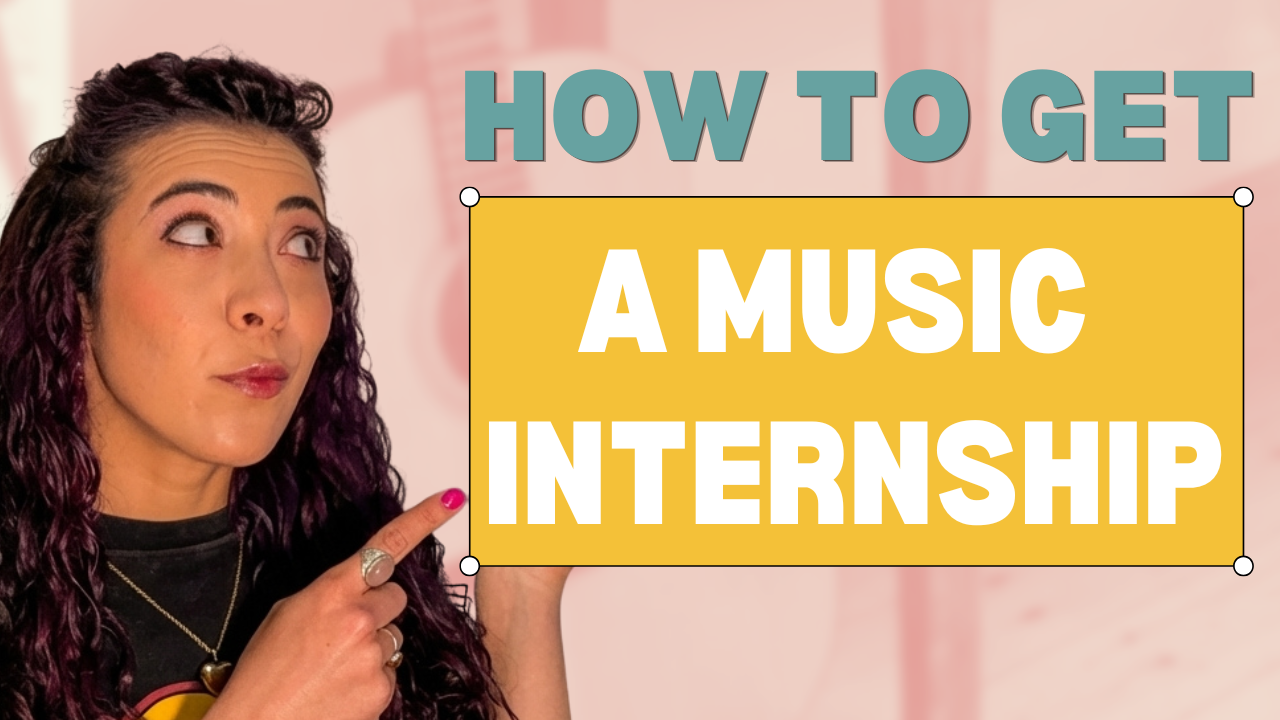
Check out our YouTube video for a step-by-step guide
Hold up, don’t hit send yet. First, tidy your digital house.
If a studio manager likes your email, the next thing they’ll do is search your name. And if they land on a half-finished LinkedIn, a broken portfolio link, or a random page that doesn’t show what you actually do, you’ve made it harder for them to say yes.
So before you send anything, make sure your online presence is clean, current, and easy to understand in 10 seconds. Follow these steps:
1. Clean up your socials: Make sure your LinkedIn photo looks professional (avoid cropped party pics!) and your headline is clear, like ‘Music Production Student’.
2. Check your links: Create a portfolio and make sure it is accessible. Do the links actually open? Is the folder organized? A clean Google Drive link is way better than a fancy website that doesn’t load.
3. The ‘6-Second’ Resume: Recruiters scan resumes in about 6 seconds, so we need to work smarter in this ADHD world.
Put tools at the top: If you know Pro Tools, Excel, Canva, or Logic Pro, list these right at the top under your contact info.
Keep it to one page: If they want to know your life story, you are more than welcome to tell them during the interview.
Pssst… PDF ONLY! Never send a Word doc.
4. Be ready to strike: Now, you can send the email. Have a cover letter template ready to tweak quickly, and keep your CV on your phone for those late-night applications (the ones that always seem to work!).
How to Turn an Internship Into a Job
This is the goal, right? You don’t want to intern forever.
So, let’s say you landed that dream 6-month internship at Sony Music. Amazing. But let me guess, you already feel the void taking control over you. You’re facing intrusive thoughts like ‘What will I do next? Should I pack it up and go back to Kansas with Dorothy Gale?”
First of all: breathe. You are not going back to Kansas (unless you want to). You are going to secure the bag. Let me share some crucial tips and tricks for this industry.
Make a List: Keep a note on your phone. Every time you finish a task, write it down. At the end of your internships, you won't just say "I learned a lot," you'll have a list of data that proves your value.
Ask for Feedback Early: Don’t wait until the last day. Ask halfway through: "Is there anything I can do to make your life easier next week?" It instantly shifts the vibe from ‘student’ to ‘team player.’
Network: Connections with colleagues can secure your job position.
Reference: Ask for a LinkedIn recommendation before you leave.
Be present: Keep in touch, send that email or text message.
Want to Start Producing But Not Sure Where to Start?

Conclusion
A good music internship won’t magically ‘make you’ an industry professional overnight. What it does give you is access to the room where things actually happen, the planning, the deadlines, the decisions, the real workflow behind releases, sessions, and campaigns.
The goal isn’t to find a perfect internship. It’s to find one where you’ll genuinely learn while you help. If there’s training, a clear supervisor, and a fundamental structure, you’re already in a much better situation than most.
And if you’re thinking ‘I’m not ready yet’… that’s normal. You don’t need to know everything. You need to be reliable, organised, and easy to work with. In this industry, those traits open doors fast.