Music Grants for Independent Artists: How to Get Funding in 2026
Table of Contents
The 4th Funding Pillar - Grants
Can I, as an individual artist, apply for a Grant or Fund?

Key Takeaways
Grants are a legitimate funding tool, not a fantasy. If you can present a clear project with outcomes, you can get funded.
You can apply solo, but you must look professional: a timeline, a budget, and proof that you can execute.
Know the buckets: Creation, Marketing/Promo, Touring/Export, and Professional Development.
Win the trifecta: strong music, a timely story, and a realistic budget backed by real quotes.
Letters of support are leverage: third-party proof beats self-promotion every time.
Start local first: city-level grants often have less competition than national programs.
Expect rejection: it’s a volume game, and you get faster every time you apply.
The 4th Funding Pillar
If you ask most people, they’ll tell you there are only three ways to fund a music career in 2026:
Sign a terrible deal with a label (and lose your masters).
Take out a loan (and lose your sleep).
Have a rich dad (and lose your street cred).
That advice is outdated.
There is a fourth pillar that successful independent artists use to build their careers without going into debt: Grants.
It sounds too good to be true, “free money?” but it’s actually a legitimate business tool. Governments, non-profits, and even brands have budgets set aside to support culture and creative projects.
So instead of treating your music career like a lottery ticket, start treating it like a startup looking for seed funding.
Can I, as an individual artist, apply for a Grant or Fund?
The short answer: YES.
The long answer requires an identity shift. Grant juries don’t fund vague dreams. They fund clear projects with outcomes, planning, and accountability.
You might see yourself as a singer-songwriter with a notebook full of feelings. The jury needs to see you as the lead of a creative project who can actually deliver.
You don’t need a manager in a suit.
You don’t need an LLC (usually).
You do need to show that you’re professional.
The Trick
Most applications ask about your Team. If you’re solo, don’t leave this blank. List the collaborators you actually plan to work with (producer, mixing engineer, videographer, PR support, mentor) and add one line about what they’ll contribute. It signals delivery power, not just ideas.
What Grants Are Available for Musicians?
Grants aren’t just big bags of cash labeled “For Music.” They’re usually specific. You need to know which bucket you’re dipping into.
Bucket A: Creation Grants
What it pays for: studio time, mixing, mastering, and session musicians.
The catch: this is the hardest category because everyone applies. Competition is fierce.
Bucket B: Marketing / Promo Grants
What it pays for: PR campaigns, music videos, content creation, and social media ads.
The catch: you need a clear plan. “I want to go viral” is not a plan. “I want to spend $2k on TikTok ads targeting listeners in Berlin” is a plan.
Bucket C: Touring / Export Grants
What it pays for: gas, flights, hotels, and visa fees.
The catch: these grants can be easier to justify because outcomes are measurable: confirmed shows, travel dates, audience growth, and cultural exchange.
Bucket D: Professional Development
What it pays for: conferences, masterclasses, mentorship, and hiring a consultant.
The catch: you need to explain the ROI. What will you do with the skills, contacts, or strategy you gain, and how will it create a measurable outcome (release plan, tour, audience growth, revenue) within a clear timeline?

How to Win the Money
Winning a grant isn’t about luck. It’s about hitting the three essentials:
The Music
Your work needs to be at a professional level. If the demo is too rough, they’ll assume the project isn’t ready.
The Story
Why does this project matter right now, and why are you the right person to deliver it?
Bad: “I want to record an album because I have songs.”
Funded: “I just gained 5,000 followers on Instagram, and I need to release this single now to capitalize on that momentum before my fall tour.”
The Budget
A realistic budget signals competence. If your numbers look made up, your application gets weak fast.
Get real quotes: Don’t guess that mastering costs $500. Email an engineer, get a quote, and attach it. It proves you did your homework.
The Secret Weapon: Letters of Support
You claiming you are great is marketing. Someone else claiming you are great is proof.
Get a local venue owner, a radio host, a community arts organizer, or a slightly bigger artist to write a one-page letter saying: “I believe in this artist and this project.” It can boost your score instantly.
Where to Look
The Big Guys: National Arts Councils. High competition, but also high reward, don't start here.
The Local Guys: City Arts Councils and Tourism Boards. Lower amounts are often easier to win. They may have funding to “activate” the city. Let them pay you to do it.
The Corporate Guys: Brand creator funds. Shoe companies, energy drinks, and tech platforms sometimes run funding programs. They want visibility, you want budget. Make it a win-win.
The Societies: Your PRO (ASCAP, BMI, PRS, SOCAN, etc.) may offer grants, foundations, or support funds for members. Check their website.
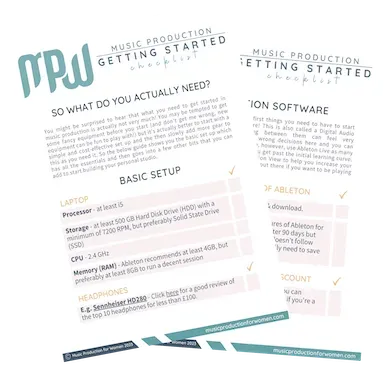
Want to Start Producing But Not Sure Where to Start?

Conclusion: The Volume Game
Here is the hard truth: you will get a No.
You might get five No’s. That’s normal.
The secret is efficiency.
The first grant application takes a week of stress. The tenth one takes an hour because you’re reusing your core assets: bio, project description, budget template, and support letters.
Once you build the grant muscle, it becomes part of the job, like rehearsal or mixing.
Ready to start?
Stop scrolling. Go to your local city council website and search “Arts Funding.” Download the PDF. Read it.
That’s how you start. And let us know how your little funding treasure hunt is going!