Mono vs Stereo Audio: What’s the Difference?
Table of Contents
Key Takeaways
Mono audio uses one channel, while stereo audio uses two channels: left and right.
Mono usually feels centered, focused, solid, and stable.
Stereo usually feels wider, more spacious, immersive, and directional.
Mono is useful when you want important sounds to feel clear and strong in the center of the mix.
Stereo is useful when you want to create width, space, movement, and atmosphere.
Stereo is not automatically better than mono. A strong mix needs both focused center elements and wider supporting elements.
“Mono Audio” in your phone or laptop settings combines the left and right channels into one centered signal.
Checking your mix in mono can help you notice if important sounds disappear, become weak, or only worked because they were spread wide in stereo.
You’re setting up your DAW, your tea is still hot, you’re ready to record the vocal take of your life, and suddenly a tiny dropdown menu rudely interrupts your creative flow:
Mono or stereo?
If you’re new to music production, this can feel surprisingly confusing. Stereo sounds “bigger,” so it must be better… right?
Understanding mono vs stereo audio is one of those incredibly simple production concepts that can completely change the way your recordings and mixes sound. It affects how focused your vocals feel, how punchy your kick drum hits, how wide your track sounds, and whether your music will actually survive being played out of a Bluetooth speaker or a club PA system.
In this article, we’ll break down the difference between mono and stereo audio, what each one does, and why understanding both can help your mixes feel clearer, wider, and more balanced.
What Is Mono Audio?
Mono is short for monophonic, which literally translates to “one sound.”
In audio production, mono audio uses one single audio channel. This means the exact same signal is sent equally to both the left and right speakers.
That does not mean mono audio comes only from one speaker! If you pan a mono vocal in the center, you’ll hear it coming from both your left and right monitors equally. Because both sides of your headphones are playing the exact same audio, your brain naturally perceives the sound as coming from the center of the mix, right between your eyes.
Mono is your best friend when you want a sound to feel:
Focused
Solid
Punchy
Clear
Centered
This is why the foundational, heavy-lifting elements in a mix are usually mono.
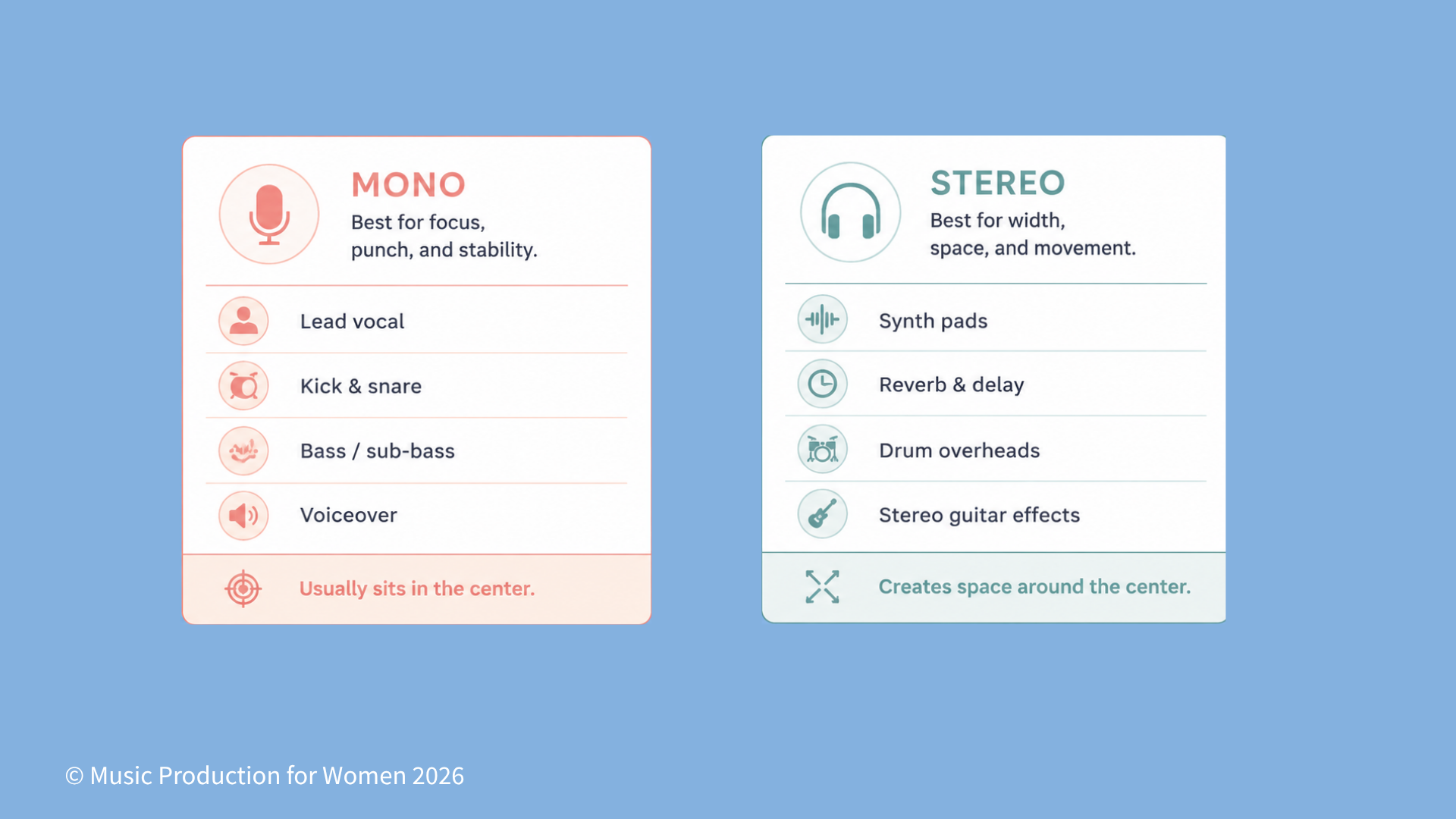
Common examples of mono sounds include:
Lead vocals recorded with one mic
Kick drums and snares
Bass guitars and sub-basses
Voiceovers
Many dry synth basses
Think of mono as the anchor of your mix. It gives your most important sounds a strong, stable home in the center so they don’t get lost in the sauce.
What Is Stereo Audio?
Stereo is short for stereophonic.
In audio production, stereo audio uses two independent channels: left and right. Because these two channels can contain different audio information, they create the beautiful illusion of width, space, and direction.
When you listen on headphones and hear a hi-hat ticking slightly to the left, a guitar strumming on the right, or a lush reverb wrapping around the back of your head, you’re hearing stereo information.
Stereo audio makes a sound feel:
Wider
More spacious
Immersive and atmospheric
Three-dimensional
Common examples of stereo sounds include:
A piano recorded with two microphones
Drum overheads capturing the whole kit
Lush stereo synth pads
Backing vocal harmonies panned left and right
Reverbs and delays
Stereo guitar effects
Stereo is the magic dust you sprinkle around the main elements of your track to give them an environment to live in.
Mono vs Stereo Audio: The Main Difference
To keep it super simple, the main difference between mono and stereo audio is the number of channels being used.
Mono uses one. Stereo uses two.
Here’s a quick cheat sheet:
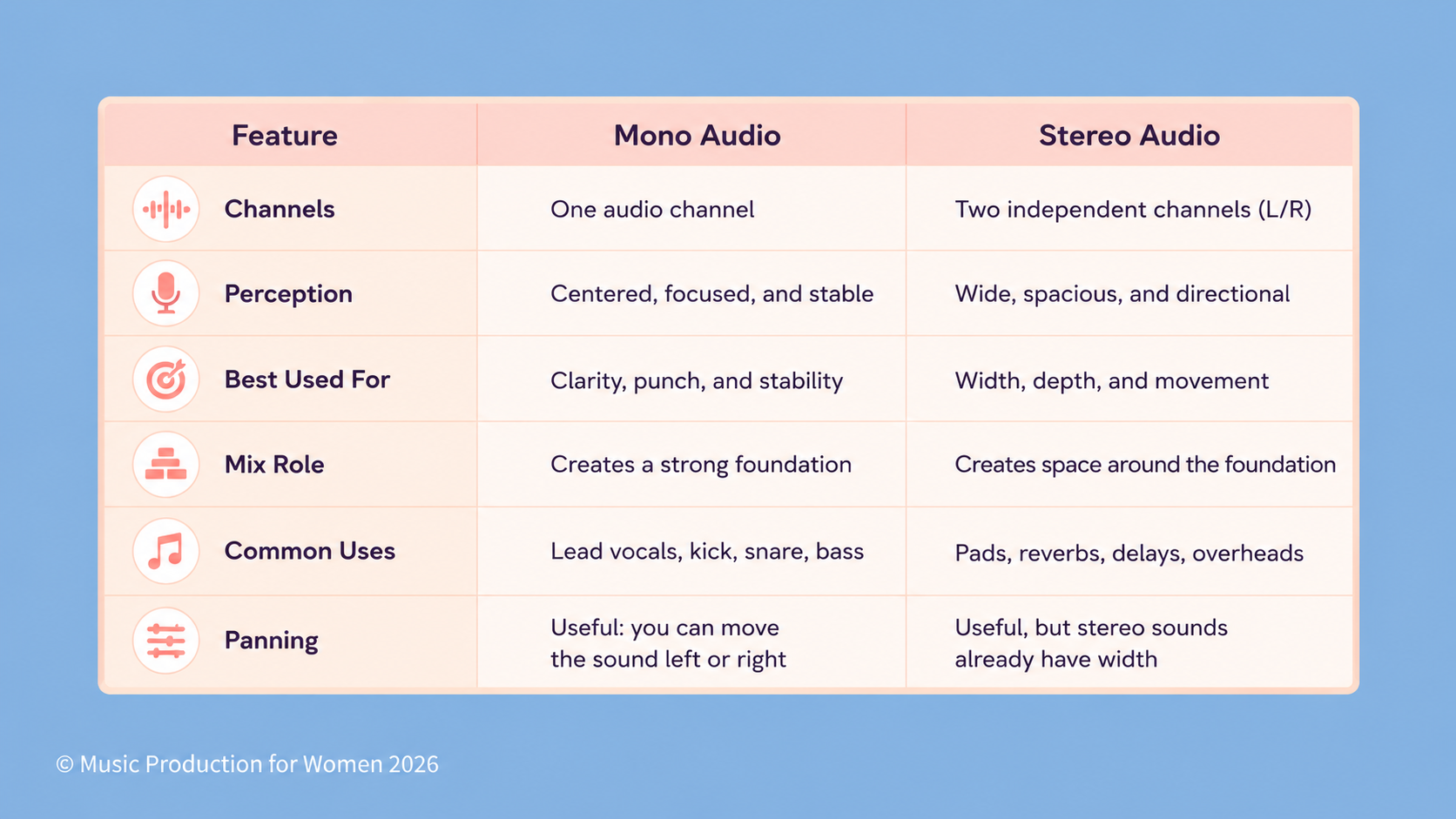
The key takeaway here is not about “good vs bad.”
Mono = Focus.
Stereo = Width.
Mono helps your most important sounds feel strong and clear. Stereo helps your supporting sounds create space, depth, and emotion around them. A professional mix absolutely needs both!
Is Mono or Stereo Better?
If you’ve ever Googled “mono or stereo: which is better?”, the honest truth is: neither. They just do different jobs.
A helpful way to think about it is like a photograph. Mono is the sharp, focused subject in the center of the picture. Stereo is the beautiful, blurred background that gives the photo depth.
If your mix is 100% mono, it might feel a bit narrow, flat, or crowded. But if everything in your mix is heavily widened in stereo, it can feel unfocused, blurry, and completely lacking in punch.
The goal is to choose the right format for the right sound.
What Does “Mono Audio On or Off” Mean?
You may have seen a setting on your phone or laptop called Mono Audio, usually inside the accessibility settings.
When Mono Audio is turned on, your device combines the left and right channels into one centered signal. This means you no longer hear the full stereo image, including panning, width, and left/right movement.
This can be really useful for accessibility, especially if someone is listening with one earbud or has hearing loss in one ear.
For everyday music listening, most people will want to leave Mono Audio turned off so they can hear the mix as intended.
As producers, though, we sometimes check our mix in mono on purpose. This helps us hear whether the track still works when the left and right channels are collapsed together, revealing phase issues, disappearing sounds, weak vocals, or elements that only sounded good because they were spread wide in stereo.
The goal is not to listen in mono all the time. It’s to briefly check your mix in mono, fix any problems, and then switch back to stereo.
Quick Rule of Thumb for Beginners
If you ever feel lost, come back to this simple idea:
Mono gives your mix focus.
Stereo gives your mix width.
Your most important sounds usually need a strong center.
Your supporting sounds can help create space around that center.
A strong mix does not come from making everything stereo. It comes from using mono and stereo intentionally.
Want to Start Producing But Not Sure Where to Start?

Final Thoughts
Mono and stereo are not competing against each other. They are two different paintbrushes that help you shape the listener’s experience.
Mono helps your mix feel focused, strong, and reliable. Stereo helps your mix feel wide, emotional, and immersive.
The goal is not to blindly make everything stereo just because it sounds fancy. The goal is to make intentional decisions. Just ask yourself: does this sound need to feel solid and punchy, or atmospheric and wide?
Once you understand that, the “mono vs stereo” panic disappears, and your mixes will instantly start to feel cleaner, wider, and much more professional.
Now go make some space in that track!
FAQ
Reference List
Ableton — Live Audio Effect Reference
Sound On Sound — Are There Any Panning Rules for Maintaining Mono Compatibility?
MusicRadar — How to Pan Like a Pro and Spread Your Mix Across the Stereo Image