Dynamic Microphone vs. Condenser: Which is Best for You?
Table of Contents
What is a Condenser Microphone?
What is a Condenser Microphone Used For?
What is a Dynamic Microphone Used For?
Which Mic is Better: Dynamic or Condenser?
Is a Condenser or Dynamic Mic Better for Singing?

Key Takeaways
Condenser mics = detail queens. They’re super sensitive and pick up all the little nuances in vocals and instruments. They shine in quiet, treated rooms where you want to hear every breath, string shimmer and a bit of “air” on top.
Dynamic mics = h besitive and way more chill about noise. Perfect for loud sources, live gigs, rehearsal rooms, guitar amps and any “real-life” space that isn’t exactly a fancy studio.
Condensers are often used in studio recording, podcasting and acoustic instruments, while dynamics shine in live vocals, drums, guitar amps and broadcasting.
No mic is “better” in general. It depends on your environment, genre, vocal style and budget.
For singing: condensers are fantastic for studio vocals in a controlled space, while dynamics are often the better choice for live shows or bedroom setups with lots of background noise.
If you’ve ever tried to buy a microphone and ended up staring at the words “dynamic” and “condenser” like they were two different planets… welcome, you’re in the right place. On paper, they’re both just “mics”. In practice, they can feel completely different: one seems to pick up every tiny breath, the other laughs in the face of loud guitar amps and stage noise. In this guide, we’ll break down the differences between a dynamic microphone vs a condenser microphone in plain language, look at what each does best, and help you decide which makes sense for your music, your voice, and your space.
What is a Condenser Microphone?
A condenser microphone is the drama queen of the mic world. It’s super sensitive and loves details. Inside, there’s a tiny, lightweight diaphragm sitting very close to a charged backplate. Together, they work like a mini capacitor: sound hits the diaphragm, it moves slightly, and that movement is converted into an electrical signal.

What you actually need to know (no physics exam required):
It’s very sensitive: it picks up quiet sounds and little nuances in your voice or instrument.
It has a wide, bright frequency response, so you get clarity and “air” in the top end.
It needs extra energy to work, which is why you have to switch on phantom power (+48V) on your audio interface, usually that little button labelled “48V”.
Because of all this, a condenser mic will happily capture the texture of your voice, the shimmer of an acoustic guitar… and the sound of your room (neighbours, computer fan, echo, all of it). Excellent in a lovely, quiet space; a bit too honest in a noisy bedroom.
What is a Dynamic Microphone?
If condensers are the drama queens, dynamic microphones are the chill, unbothered besties of the mic world. They’re the ones you throw in a bag, take to rehearsal, drop once (or three times)… and they still show up to work.
They use a super simple, tough design, like a speaker in reverse. A little coil of wire is attached to a diaphragm and sits inside a magnet. Sound hits the diaphragm, the coil moves, and that movement becomes your audio signal. No fancy charged capsule, no extra power needed.

What this actually means:
They’re forgiving and focused: Dynamics are less sensitive than condensers, which is actually great in home recording studios. They mostly listen to what’s right in front of them (your voice, your amp) and ignore a lot of the background noise and room echo.
They love loud stuff: Shouting singer? Snare drum? Guitar amp on “please stop” level? A dynamic mic can sit right in front of all that without freaking out or distorting. They’re built for high sound pressure levels.
They’re built like tanks: With fewer fragile parts, they can handle being gigged, packed, humid, sweaty, dropped… all the things that would give a condenser a minor heart attack.
That’s why you see dynamic microphones everywhere: on stage, in rehearsal rooms, in podcast setups, and in front of loud amps. They’re the reliable workhorses you reach for when the job is messy, loud, or both.
Here’s a simplified look at how condenser and dynamic microphones “hear” sound differently across frequencies.

What is a Condenser Microphone Used For?
Condenser mics are the detail freaks of the mic world. You use them when you want things to sound clear, shiny and “like a record”.
Here’s where they’re most at home:
Studio vocals: the big, pretty mic in every studio photo. Great for breathy pop/R&B vocals, little cracks in the voice, and that bright “radio” sparkle.
Acoustic instruments: acoustic guitar, piano, strings, flutes… anything you want to sound natural and full of detail.
Drum overheads and room mics: they grab the shimmer of the cymbals and the sound of the whole kit in the room.
They’re also popular for podcasts and voiceovers, but only if your room is quiet. A condenser will happily record your voice… and your neighbours, your fan, and the bus outside.
So: if your space is under control and you want clarity + detail, the Condenser is your girl.
What is a Dynamic Microphone Used For?
Dynamic mics are the street-smart cousins of condensers. They don’t care if the room is messy, the band is loud, or the stage is chaotic...they just get on with it.
Here’s where they’re most at home:
Live vocals: pretty much every classic handheld stage mic is a dynamic. They’re less prone to feedback and can survive being dropped mid-gig.
Loud instruments: guitar amps, snare, toms, even kick drum, you can put a dynamic mic right up close without it distorting or panicking.
Broadcasting, streaming, podcasting in real rooms: they give voices a warm, “thick” sound and are much less likely to pick up keyboard clacks, chair squeaks and the neighbour watching TV.
Noisy or untreated rooms: in a normal bedroom with traffic, AC and reflections, a dynamic will usually ignore more of the chaos and focus on you.
So any time the situation is loud, live, or less than perfect, the dynamic mic is the one you want on your team.
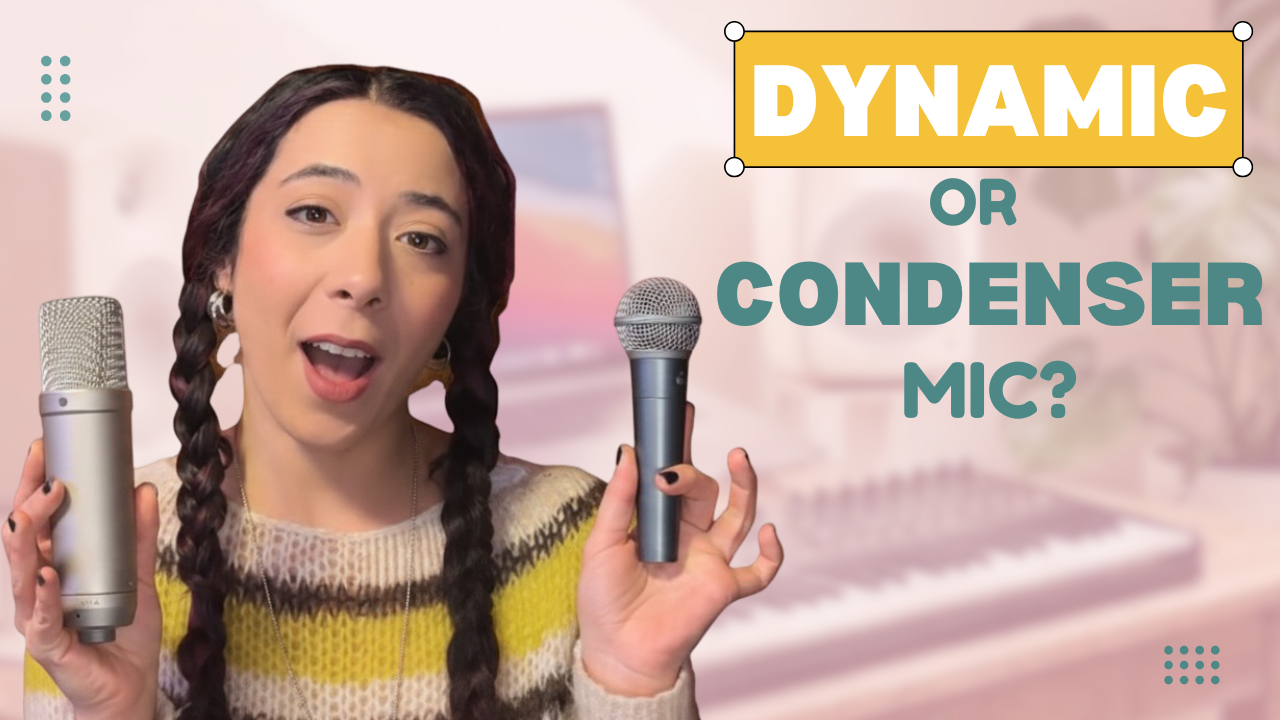
Check out our YouTube video for a more detailed breakdown
Which Mic is Better: Dynamic or Condenser?
Short answer? Neither. Long answer: It depends.
Think of it like this:
If your room is quiet and treated, and you want shiny, detailed “like a record” vocals, go with a Condenser.
If your room is noisy/echoey/real-life and you’re dealing with loud stuff or live situations, go with a Dynamic.
A few quick questions to help you choose:
What’s your room like?
Quiet, treated, fairly dead? = A condenser can really shine.
Echoey bedroom, traffic, flatmates, noisy street? = Go Dynamic.
What are you recording the most?
Breath-y pop vocals, acoustic guitar, piano, strings? = Lean Condenser.
Live vocals, drums, guitar amps, streaming or podcasting in a standard room? = Lean Dynamic.
What tone are you after?
Bright, airy, hi-fi? = Condenser.
Warm, focused, “radio” vibe? = Dynamic.
If you’re just starting out in a normal bedroom and don’t want your mic recording your neighbours, traffic, or your laptop fan, a dynamic mic is usually the safest first purchase. You can always invite a fancy condenser to the party later.
Is a Condenser or Dynamic Mic Better for Singing?
It really depends on where you’re singing, not just what you’re singing into. Suppose you’re in a reasonably quiet, non-echoey room. In that case, a condenser mic will usually make your vocals sound more “like a record”. It picks up all the nice stuff: breath, emotion, little details, and that shiny top end you hear on modern pop and R&B. If you’re on stage, in a rehearsal room, or in a very “real life” bedroom (traffic, flatmates, rigid walls), a dynamic mic is usually the better friend. It doesn’t panic with loud volumes, is less likely to feed back, and won’t record half the street along with your chorus. Super simple tip: if your space is under control and you want detail and sparkle, opt for a condenser. If your studio is noisy, chaotic, or messy, choose a dynamic microphone and save yourself a lot of pain later in the mix.
Want to Start Producing But Not Sure Where to Start?

Final Thoughts
If all of this still feels a bit much, that’s fine. The point isn’t to memorise every technical detail: it’s to know what each mic is good at so you can pick the one that makes your life easier.
If your room is pretty honest and you want clear, shiny, “like a record” vocals and instruments, a condenser will do a beautiful job. If your world is more rehearsal rooms, loud amps, flatmates and traffic, a dynamic mic will likely give you cleaner, more usable recordings with far less drama.
You don’t need a locker full of microphones to make great music. Start with one mic that fits your reality right now, learn how it behaves on your voice and instruments, and let your ears tell you what’s working. The “best” mic is the one that helps you finish songs, not the one with the fanciest spec sheet.